
Introduction
Every small business has a story — but not everyone knows how to tell it.
In a crowded digital world, where audiences scroll past endless ads, storytelling in digital marketing helps brands stand out by connecting on a human level. It’s not about selling a product — it’s about sharing meaning, purpose and emotion.
If you’ve ever wondered why your audience isn’t engaging or remembering your brand, storytelling might be the missing piece. In this guide, you’ll learn how to use storytelling strategically to build trust, emotion and loyalty — one story at a time.
What Is Storytelling in Digital Marketing?
Storytelling in digital marketing means using narrative techniques — character, emotion and transformation — to communicate your brand’s values and purpose. Instead of simply telling people what you do, you show them why it matters.
When a café shares the story of how it began roasting coffee to support local farmers or a freelancer talks about turning a passion project into a full-time business — people connect. They remember.
👉 To understand why this emotional bond matters, explore What Is a Brand (and Why Small Businesses Need One) — it explains how a brand is more than a logo; it’s the perception your audience builds over time.
How Storytelling Differs from Traditional Marketing
Traditional marketing often focuses on promotion — features, discounts or benefits.
Storytelling focuses on emotion — the feeling your product or service creates.
For example:
-
A traditional ad says: “Our skincare line removes wrinkles fast.”
-
A storytelling ad says: “We help women feel confident in their own skin again.”
That emotional shift is powerful. Stories invite the audience to be part of something bigger than a transaction.
Key Elements of a Great Brand Story
Every memorable story — whether in film or marketing — has four essential parts:
-
Character – Your brand or customer as the “hero”.
-
Conflict – The challenge or problem they face.
-
Emotion – The heart of the story; what makes people care.
-
Resolution – How your brand provides transformation or relief.
When you combine these, your brand message becomes something people feel instead of just hear.
Why Storytelling Works — The Psychology Behind It
Humans are wired for stories. Long before ads and algorithms, we learned through narratives.
That’s why storytelling isn’t a marketing trick — it’s human communication at its most natural and persuasive.
Emotional Triggers That Build Trust
Research shows that emotions influence over 90% of purchasing decisions.
When a brand shares vulnerability, purpose or empathy, it activates trust.
For example, when a small eco-brand admits the challenges of sustainable packaging but shows commitment to improvement — that honesty builds loyalty.
👉 Read more in How to Build Brand Trust Online — where we explore how transparency and consistency create lasting relationships.
Why People Remember Stories More Than Data
According to Stanford University research, people remember stories up to 22 times more than facts alone.
Data may inform, but stories inspire.
A statistic might tell your audience that your product saves time — a story shows it by painting a picture of someone finally enjoying dinner with their kids instead of working late.
That emotional image sticks.
How to Use Storytelling in Your Marketing Strategy
Let’s turn theory into action.
Here’s how to integrate storytelling into your content — step by step.
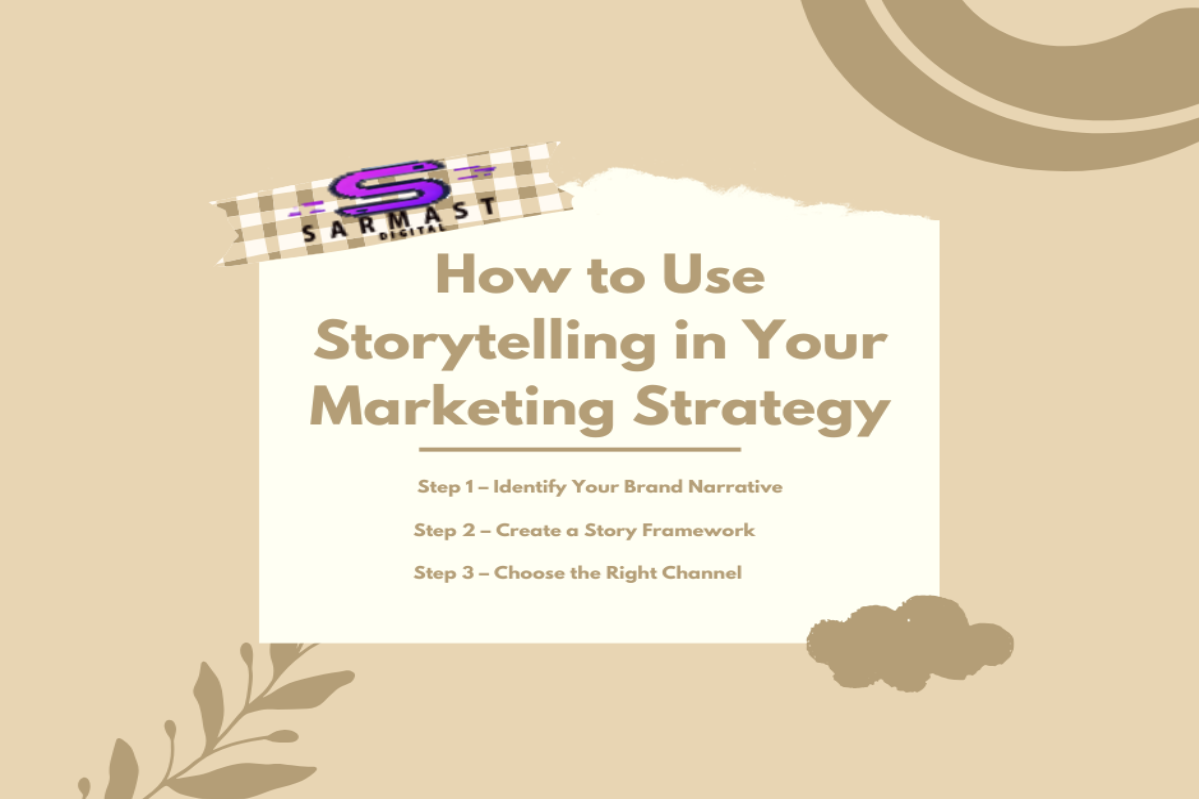
Step 1 – Identify Your Brand Narrative
Start with your “why.”
Ask yourself: Why did this business start? What problem are we solving and why does it matter?
Your brand story isn’t your history — it’s your mission told in a relatable way.
Write it as if you’re talking to one person who truly needs what you offer.
Reflection question:
💭 What story would your audience tell about your brand today?
Step 2 – Create a Story Framework (Hero’s Journey)
The Hero’s Journey is a timeless storytelling structure you can adapt for marketing:
-
The Hero (your customer) faces a challenge.
-
The Guide (your brand) offers support.
-
The Transformation — the customer achieves success with your help.
For instance, a freelance designer might tell a story of helping a struggling small business rebrand — showing the before-and-after transformation visually through posts or case studies.
Step 3 – Choose the Right Channel and Format
Not every story fits every platform.
-
Social media: Short, emotional snapshots (Instagram Reels, TikTok, LinkedIn posts).
-
Blogs: Deeper storytelling and education (case studies, behind-the-scenes).
-
Video: Emotional storytelling through visuals and voice.
-
Newsletters: Personal, one-to-one tone that builds loyalty.
Start small. Pick one format and master it before expanding.
Examples of Successful Brand Storytelling
Let’s look at brands that have done this brilliantly.
Coca-Cola: Selling Happiness, Not Soda
Coca-Cola doesn’t sell drinks — it sells joy and togetherness.
Their “Share a Coke” campaign invited people to personalize bottles with names, turning a product into a shared story.
Airbnb: Belong Anywhere
Airbnb’s storytelling centers around travelers and hosts. Instead of showing rooms, they show experiences — belonging, connection and local stories.
Local Example: A Small Family Bakery
A small bakery in Rasht could tell the story of a grandmother’s original recipes, passed down and modernized for today’s families. The emotion of tradition and love beats any ad slogan.
Why These Stories Worked
-
Authenticity – Real people, not perfect pictures.
-
Consistency – Same tone across every touchpoint.
-
Emotion – Each story connects to a universal human feeling.
Lessons for Small Businesses
You don’t need big budgets — just big heart.
Focus on:
-
Real customer stories
-
Behind-the-scenes moments
-
Your “why”
-
Visual storytelling (photos, reels, short videos)
Small, consistent stories build big trust.

Storytelling for Small Businesses and Freelancers
Storytelling isn’t just for global brands. It’s a game-changer for solo professionals and small teams who rely on authenticity.
👉 Learn how to shape your message authentically in How to Build a Personal Brand as a Freelancer — it’s a natural next step after mastering your story.
Storytelling on a Budget
You don’t need a film crew.
Use what you already have:
-
Share client success stories (with permission)
-
Write LinkedIn or Instagram posts about lessons learned
-
Turn reviews into mini-stories
-
Use free design tools like Canva to visualize narratives
Remember: honesty outshines polish.
Balancing Personal and Professional Tone
Especially for freelancers, your personal story is your brand story.
Show your human side — your journey, your challenges, your wins — while keeping it relevant to your audience’s goals.
A simple way to test tone: if your message feels like a conversation, not a pitch, you’re doing it right.
Conclusion
Storytelling in digital marketing isn’t about being poetic — it’s about being real.
It’s how small businesses turn ordinary moments into meaningful connections and freelancers turn their experiences into trust.
Big goals, small steps — your next story starts today.
FAQs: Storytelling in Digital Marketing: Make Your Brand Memorable
1. What makes storytelling effective in digital marketing?
Because it connects logic with emotion. People buy emotionally, then justify rationally — stories bridge both.
2. How can small businesses use storytelling without a big budget?
By focusing on real experiences, testimonials and behind-the-scenes moments. Authenticity beats production value.
3. What are the best storytelling techniques for social media?
Keep it short, emotional and visual. Use Reels or carousels to show transformation — not just tell it.
📱 See It in Action
Watch our short Instagram reel to see how these strategies come to life 👇
big goals, small steps 💫